Blog · Saving & spending
Does Downsizing Your Home Fund Retirement?
When Can I Retire · October 26, 2026 · 8 min read
Short answer
Usually some, rarely all. After selling fees, a new home and taxes, most people keep far less equity than they expect. Run the real math first.
Does downsizing your home actually fund retirement?
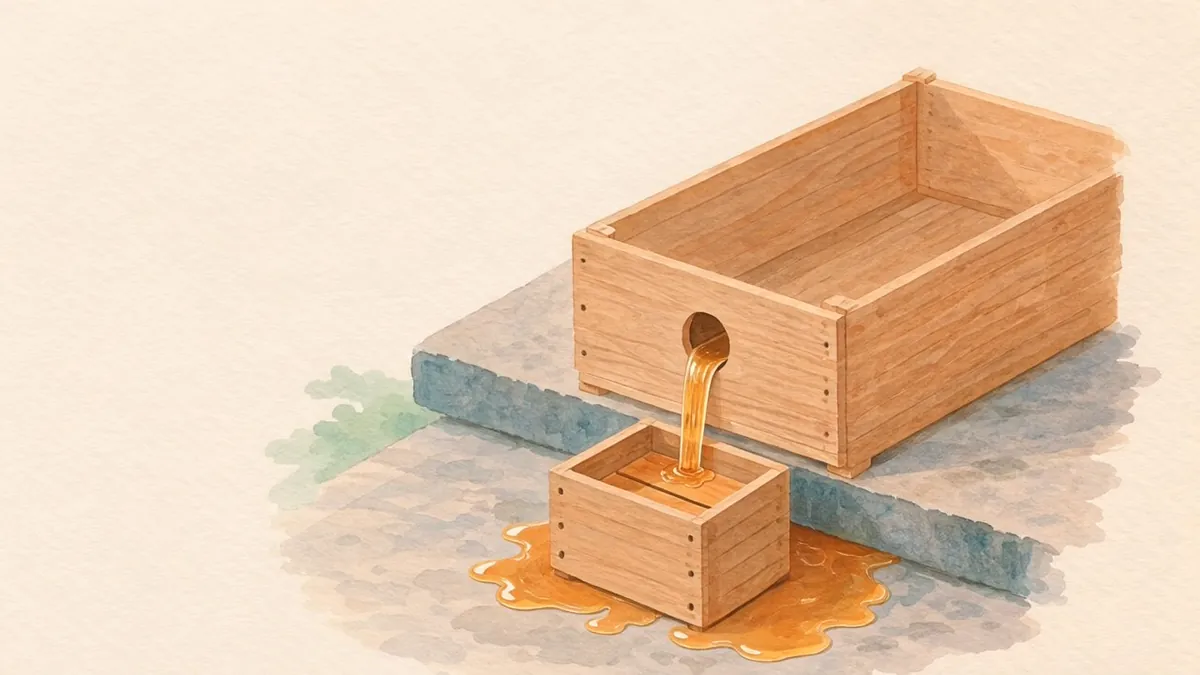
Selling a big house and buying a smaller one can free up cash for retirement, but it almost never covers all of your retirement income. After you pay selling fees, close on a new home and handle any taxes, the money left over is much smaller than the equity number you see on a housing website. Many people end up with a helpful one-time boost, not a monthly paycheck.
The number you see is not the number you keep
Homeowners often say, "I have $300,000 in equity, so I can retire on that." But equity is not the same as spendable cash. When you sell, several costs come off the top before you hold a dollar.
In the United States, if you sell your primary home (the house you live in most of the time), the IRS lets you exclude up to $250,000 of the gain from income tax if you are single, or $500,000 if you are married filing jointly. The exact rules and current limits live at irs.gov. In Canada, the gain on your principal residence is generally tax-free under the principal residence exemption. Details are at canada.ca.
But tax is only one piece. You still owe:
- A real estate agent commission, often around 5 to 6 percent of the sale price, though it varies by area and contract.
- Closing costs, inspections, repairs and moving, which can add another 2 to 3 percent.
- Transfer taxes or land transfer taxes, which differ by state or province.
- The purchase price and closing costs of the smaller home you buy.
None of these are rules you can change. They are the toll on the road between "I own a big house" and "I have cash in my bank account."
A worked example with round numbers
Imagine you own a home worth $400,000 with no mortgage left. Your equity is the full $400,000. You find a smaller house for $200,000. Here is the step-by-step math.
| Step | What happens | Amount |
|---|---|---|
| Sell price | You list and sell your home | $400,000 |
| Agent commission (6%) | Paid to the real estate agents | −$24,000 |
| Closing and repair costs (2%) | Title work, inspections, repairs | −$8,000 |
| Net sale proceeds | What hits your account after selling | $368,000 |
| New home purchase | You buy a smaller house | −$200,000 |
| Closing costs on new home (2%) | Title, legal fees, transfer tax | −$4,000 |
| Moving and setup | Truck, deposits, small repairs | −$4,000 |
| Cash left after downsizing | The "downsizing fund" | $160,000 |
You started with $400,000 in home equity. You ended with $160,000 you could actually put into savings or spend. That is about 40 percent of the equity number, and every dollar you spent on the new house is locked back into another property.
If your original home had a $150,000 mortgage still on it, you would start with only $250,000 in true equity. The same dollar fees apply to the sale price, but the $150,000 payoff comes off the top, so your final cash drops by the full mortgage balance. You can read more about whether paying off a mortgage before selling makes sense in this guide.
The gap that surprises most people
After downsizing, you now have, for example, $160,000 in cash plus a smaller home you own outright. But you still need money every single month for food, utilities, health care, insurance and the small emergencies life hands you.
If you need $3,000 a month and Social Security (a monthly check you earn through your work history) covers $1,800 of that, you must pull $1,200 from savings every month. At $1,200 a month, $160,000 lasts about 133 months, or roughly 11 years. That covers your late 60s but not your 70s and 80s.
This is where the question shifts from "how much does my house free up?" to "does what I have left cover every year until my income, like Social Security, grows or my expenses drop?" Figuring that out is how much you need to retire.
When downsizing helps the most
Downsizing works best when three things line up:
- Your housing costs are a huge share of your budget. If your big house comes with a high property tax bill, a large yard to maintain and a second bathroom you never use, cutting that expense permanently every month matters more than the one-time cash gain.
- You still have a mortgage. Paying off the remaining balance and then buying a smaller place can cut your monthly housing cost by hundreds of dollars.
- You are willing to move to a cheaper area. A $400,000 house in a high-cost city might trade for a $150,000 house somewhere with lower taxes and a lower cost of living. That widens the cash gap you keep.
When it helps less than you think
Downsizing gives you a smaller boost when:
- You buy a smaller home at nearly the same price. You trade rooms for rooms and keep almost nothing in cash.
- Your home has very little equity because you bought recently or you have a large mortgage.
- You stay in the same neighborhood where the smaller home costs almost as much as the one you sold.
- You move to a place with higher property taxes or stricter condo or HOA fees (monthly fees for shared services in a managed community), so your monthly costs barely change.
What to do before you list your house
Walk the whole path on paper first. Take the sale price. Subtract the commission, closing costs and the full cost of the home you would buy next. Then look at the number left over and ask: does it, plus your savings, plus your Social Security or CPP and OAS checks (the two Canadian public pension payments), cover your yearly spending for every year you will be retired?
This is exactly the math When Can I Retire does for you. You can run the free check by typing in or uploading the numbers, and it works out the age you can stop working, whether downsizing closes the gap, and what happens in the years before your benefits kick in. You see every step of the arithmetic, including taxes, inflation and Social Security or CPP/OAS timed correctly.
If the answer after running the numbers is "close but not quite," that is fine. A one-time $150,000 top-up to your savings, plus a lower monthly expense, can shave a few years off your retirement date. You do not have to fund everything from one sale.
A quick sanity check before you act
- Get two or three written estimates on what the home will actually sell for, not what you hope it will.
- Ask an agent for a full written breakdown of estimated selling costs in your state or province.
- Price at least two smaller homes you would genuinely enjoy living in, including their yearly taxes and any condo fees.
- Run the gap between your monthly income (benefits plus withdrawals) and your monthly spending for a 25-year retirement. A spreadsheet works, or you can do the same math inside the free check linked above.
Downsizing is one tool, not the whole toolbox. It can shorten the distance between "not ready yet" and "ready enough." Just make sure you are looking at the real net number, not the headline equity, before you pack a single box.
Common questions
Should I rent instead of buying a smaller home after I sell?
Renting means you keep more cash liquid instead of locking it back into a property. The trade-off is that rent can rise every year, and you will never own the roof over your head. If you dislike maintenance and want flexibility to move again, renting can make sense. If you value stability and a fixed housing cost, a small owned home may suit you better. Your choice depends on your comfort with risk, your health, and whether you want to leave a home to family.
Does my state or province tax the profit on my downsized home?
In the U.S., the gain on your primary home is generally excluded from income tax up to a set dollar limit that has been $250,000 for singles and $500,000 for married couples for a long time. Check the current wording at [irs.gov](https://www.irs.gov). In Canada, the principal residence exemption usually means zero tax on the gain. Confirm your situation with the rules at [canada.ca](https://www.canada.ca).
What if I still have a 10-year mortgage on the house I want to sell?
The remaining mortgage balance is paid off first from the sale proceeds, before you see any cash. If you owe $120,000 on a $400,000 home, your starting equity is $280,000, not $400,000. Subtract selling costs from that lower number, then subtract the new purchase. Running the math with the exact payoff amount changes whether downsizing leaves you enough.
Can I put downsizing cash into a tax-advantaged retirement account?
House-sale cash cannot go into an IRA or a 401(k), because those accounts only accept contributions from earned income (wages or self-employment earnings). You can move existing 401(k) dollars into a Roth IRA through a conversion, but that is a separate tax decision about retirement money you already have, not a home-sale question. In Canada, you could put proceeds into your TFSA (a tax-free savings account) up to your available room. Check current contribution limits at [irs.gov](https://www.irs.gov) or [canada.ca](https://www.canada.ca) because they adjust over time.
Try it with your own numbers.
See your own retirement age and readiness in about 10 minutes — free, always.
Check for freeKeep reading
When Can I Retire is education, not financial advice. Rules and limits change; check the official source before you act.